

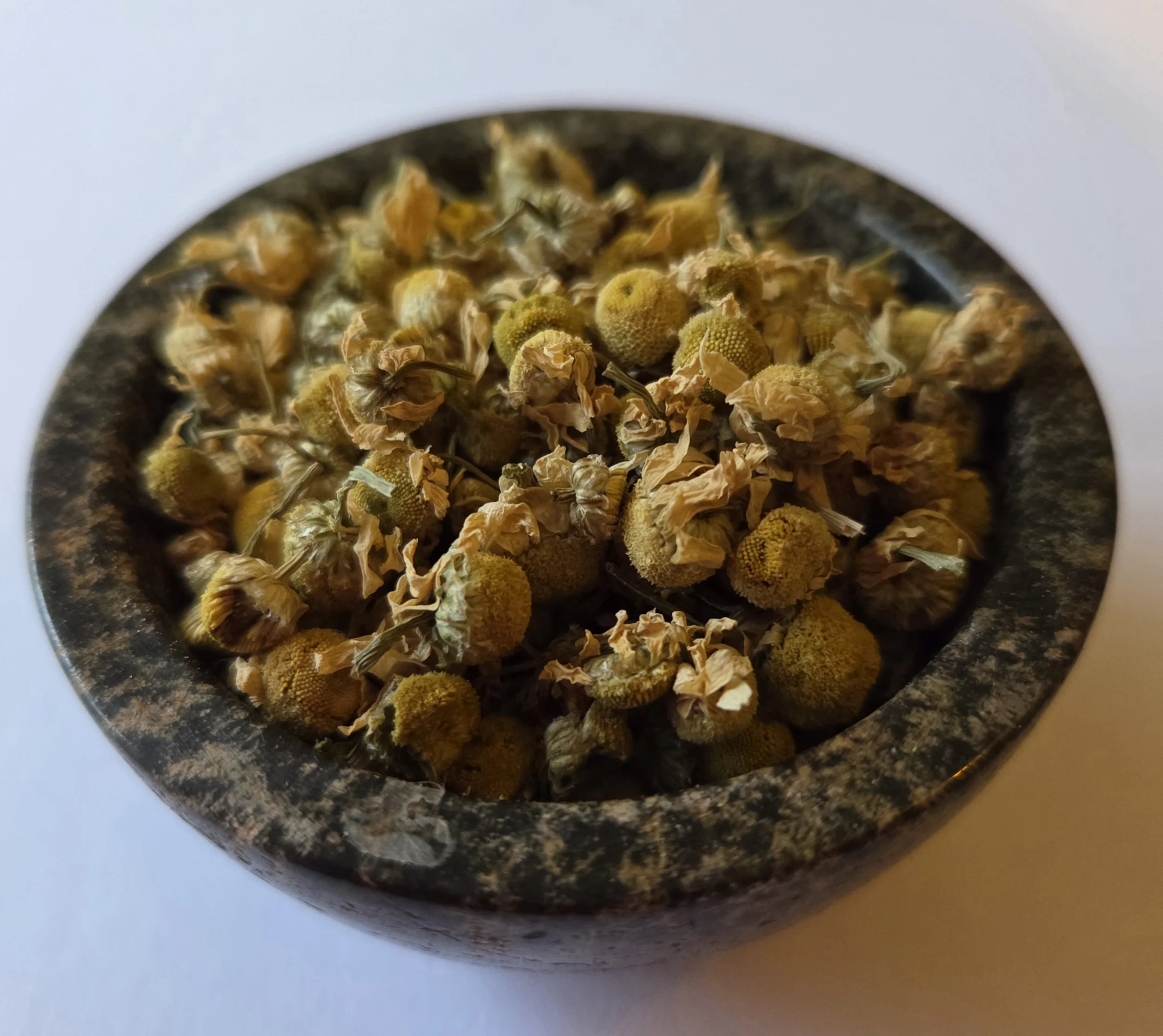
Chamomile Tea
The Story of Chamomile
Chamomile has been cherished for generations as one of nature's most widely enjoyed herbs.
For centuries, chamomile flowers have been used across traditional herbal practices to create aromatic herbal infusions, often enjoyed in the evening and as part of daily rituals. It has long been valued as a traditional botanical with a rich history of use across many cultures.
Chamomile has also traditionally been enjoyed after meals and as part of daily herbal rituals, with its delicate floral aroma and naturally sweet, apple-like flavour making it a much-loved addition to the herbal apothecary.
Beyond its long history of traditional use, modern research has begun exploring the diverse plant compounds naturally found in chamomile, including flavonoids such as apigenin, quercetin and luteolin.
Chamomile is naturally caffeine-free and contains a variety of naturally occurring plant compounds with antioxidant activity. Researchers continue to explore the complex chemistry of chamomile and the ways in which its naturally occurring compounds interact with biological systems.
Chamomile has also been the subject of ongoing scientific research investigating its traditional uses, chemical composition and naturally occurring plant compounds. As scientific understanding continues to evolve, chamomile remains one of the world's most widely recognised and historically significant botanical ingredients.
At Tide & Terrain, we believe understanding the plants we use is part of the ritual itself. We enjoy exploring the science behind our herbs alongside their traditional uses, while respecting the distinction between historical use, emerging research and established scientific evidence.
Explore the Research
Chamomile: A Review of Its Traditional Uses, Chemical Constituents, Pharmacological Activities and Quality Control Studies
A comprehensive review exploring chamomile's traditional uses, chemical constituents and the breadth of scientific research relating to this widely studied botanical.
Read the full scientific review
Chamomile: A Herbal Medicine of the Past with a Bright Future
A review examining chamomile's history of use, naturally occurring compounds and areas of ongoing scientific interest.
Understanding Chamomile Research
Research continues to investigate chamomile, its naturally occurring compounds and its long history of traditional use, contributing to a growing body of botanical and scientific knowledge.
At Tide & Terrain, we believe that the more we understand about the plants we bring into our lives, the more meaningful our daily rituals become.
Restore your terrain. Return to flow.
The Story of Chamomile
Chamomile has been cherished for generations as one of nature's most widely enjoyed herbs.
For centuries, chamomile flowers have been used across traditional herbal practices to create aromatic herbal infusions, often enjoyed in the evening and as part of daily rituals. It has long been valued as a traditional botanical with a rich history of use across many cultures.
Chamomile has also traditionally been enjoyed after meals and as part of daily herbal rituals, with its delicate floral aroma and naturally sweet, apple-like flavour making it a much-loved addition to the herbal apothecary.
Beyond its long history of traditional use, modern research has begun exploring the diverse plant compounds naturally found in chamomile, including flavonoids such as apigenin, quercetin and luteolin.
Chamomile is naturally caffeine-free and contains a variety of naturally occurring plant compounds with antioxidant activity. Researchers continue to explore the complex chemistry of chamomile and the ways in which its naturally occurring compounds interact with biological systems.
Chamomile has also been the subject of ongoing scientific research investigating its traditional uses, chemical composition and naturally occurring plant compounds. As scientific understanding continues to evolve, chamomile remains one of the world's most widely recognised and historically significant botanical ingredients.
At Tide & Terrain, we believe understanding the plants we use is part of the ritual itself. We enjoy exploring the science behind our herbs alongside their traditional uses, while respecting the distinction between historical use, emerging research and established scientific evidence.
Explore the Research
Chamomile: A Review of Its Traditional Uses, Chemical Constituents, Pharmacological Activities and Quality Control Studies
A comprehensive review exploring chamomile's traditional uses, chemical constituents and the breadth of scientific research relating to this widely studied botanical.
Read the full scientific review
Chamomile: A Herbal Medicine of the Past with a Bright Future
A review examining chamomile's history of use, naturally occurring compounds and areas of ongoing scientific interest.
Understanding Chamomile Research
Research continues to investigate chamomile, its naturally occurring compounds and its long history of traditional use, contributing to a growing body of botanical and scientific knowledge.
At Tide & Terrain, we believe that the more we understand about the plants we bring into our lives, the more meaningful our daily rituals become.
Restore your terrain. Return to flow.